Live Surgery
We show exactly what matters.
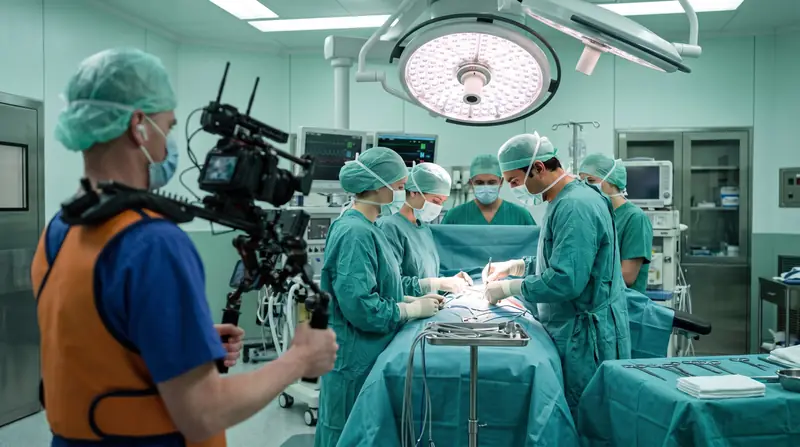 LIVE FROM THE OR
Illustration
The film is coming soon.
Live broadcasts from the sterile operating room to the lecture hall: cinema-quality close-ups, up to eight cameras, in near real time. Everything else stays covered.
How the picture gets from the OR to the lecture hall.
What doctors and visitors say.
Voices from our broadcasts in cooperation with ATOS.
“Surprised by how good the quality is.”
“I now understand better what happens in the OR and what patients face afterwards.”
“This should be offered more often.”
Many occasions. The right technology for each.
Every hospital, every room and every procedure is different. We don’t sell standard packages; we develop the technical solution for your occasion.
 Illustration
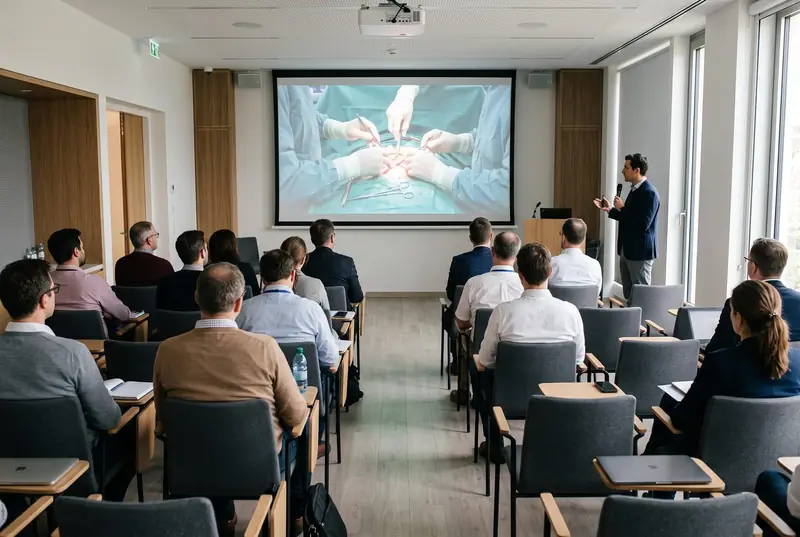
Medical training
Colleagues follow the procedure in the lecture hall: the surgical field in detail, the surgeon on screen, their explanations on the sound system. Questions from the audience go straight into the OR.
 Illustration
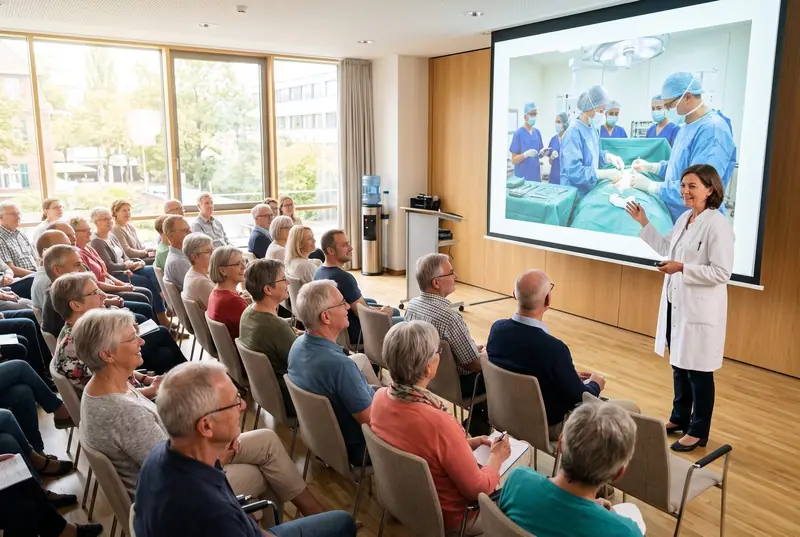
Open day
Visitors see what normally stays behind the airlock. A doctor in the hall explains what is happening and why. Those watching gain a better understanding of the procedure and the time after it.
Custom solution
Congress, workshop or a format that doesn’t exist yet: we work out an individual solution.
Only what’s needed goes into the OR.
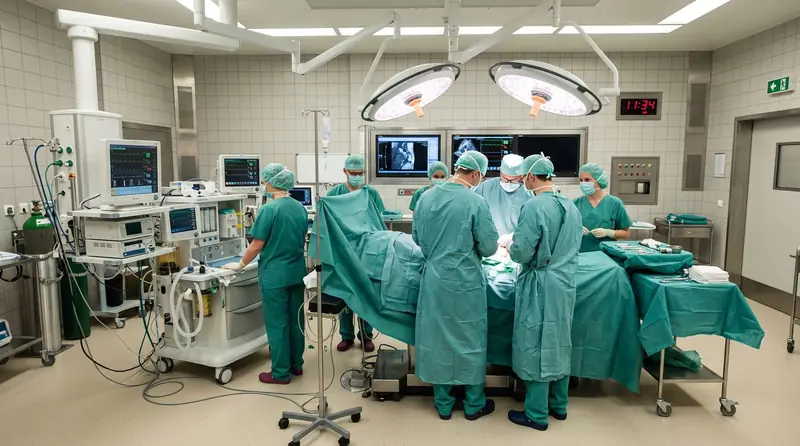
Inside the room are the cameras on their tripods and a broadcast unit we developed specifically for the OR. Vision mixing, sound and coordination happen outside the sterile area. In the OR we keep a small footprint so we are never in anyone’s way. Our mobile videographer adapts to the scene you want to show.
- Sealed broadcast unit: no exhaust air escapes into the room.
- All we need is a network port that already exists in the OR. We don’t lay any extra cables.
- Your hospital’s hygiene distances are maintained.
- On command from the OR, the control room immediately interrupts the broadcast to the audience.
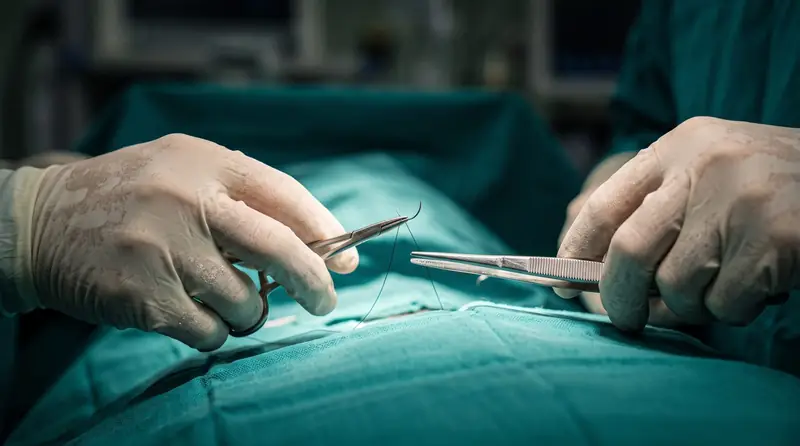
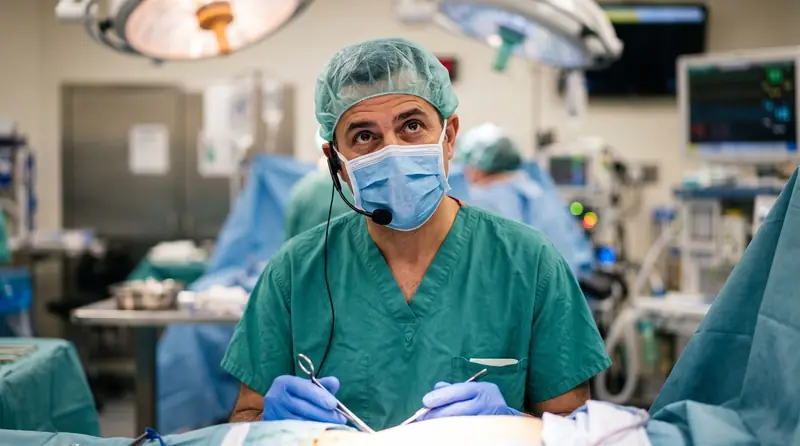
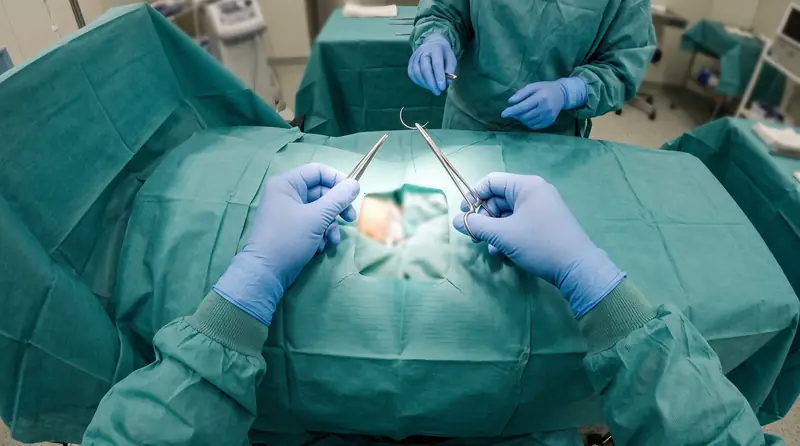
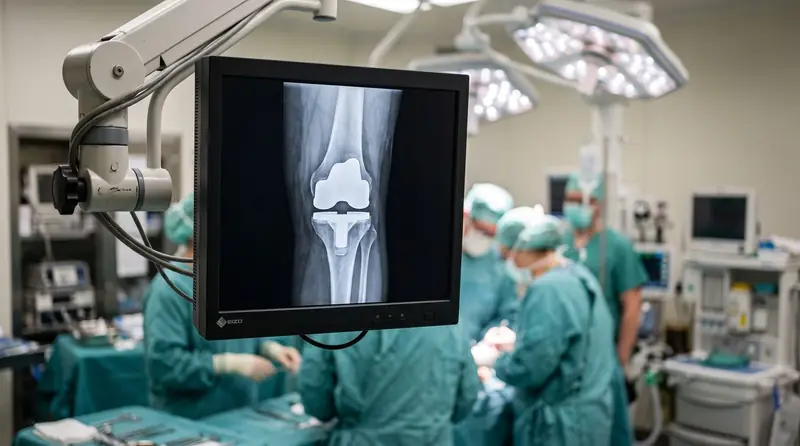 CineRig close-up
Illustration
The surgical field in detail, in cinema quality.
No standard solution? Then we build it.
Every room has its own rules. For the sterile OR we built the complete control-room technology into one sealed broadcast unit: airtight on the outside, cooled on the inside, free of condensation.
- 0air exchange with the room
- 12 htemperature-controlled, continuous
- 1unit, complete control room
Faster than the blink of an eye.
Less than 0.2 seconds pass between camera and screen. For comparison: a normal PR interval on an ECG lasts up to 0.2 seconds. That turns the broadcast into a conversation: the hall hears the surgeon, the surgeon hears the moderator. Picture and sound travel together over a network port that already exists in the OR. Meanwhile our team coordinates through its own software, reliably even where radio reaches its limits in the OR.
- seconds of latency
- < 0.2
- video sources
- 8
- network port
- 1
- extra cables
- 0
Everything from a single source.
Picture
An experienced videographer operates the CineRig for close-ups and speaker shots. Add to that the OR wide shot and a wireless FPV camera on the surgeon’s head that shows their field of view.
Sound and PA
The surgeon in the OR and the moderator in the lecture hall come through clearly. On request we provide the PA for the hall.
Live direction
We cut live between the camera views and bring in HDMI sources from the OR.
Recording
On request we record every camera angle and the audio as separate tracks.
External stream
For viewers who aren’t on site. You decide who may watch.
One point of contact
From the first call to the teardown you talk to the same people.
From first enquiry to final recording.
First call
Occasion, procedure, rooms, audience.
Technical check
We clarify network, routes and the hall with your IT and hygiene teams. Recommended: two weeks before the date.
Setup
We prefer to set up the day before so everything is ready in the morning. The basic setup takes about two hours.
Broadcast
Picture, sound and talkback are running. You focus on your guests.
Footage
On request you receive the recording. We agree on scope and delivery in advance.
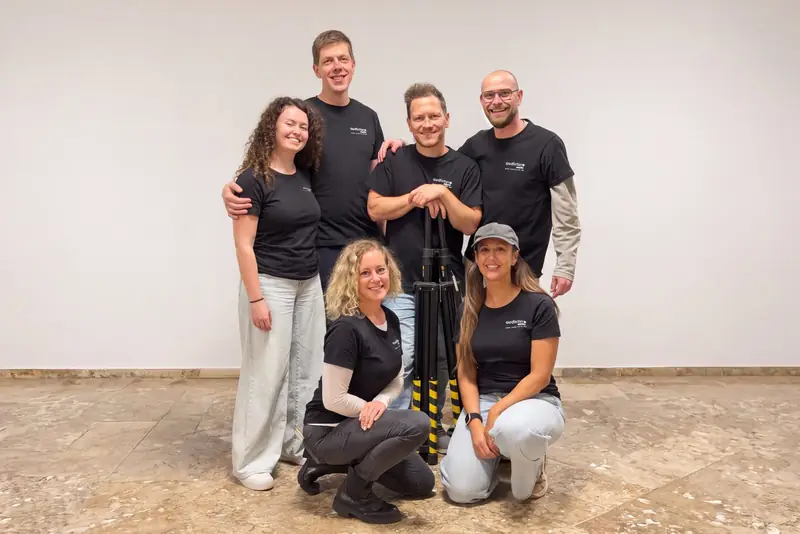
Two studios, one team.
Live Surgery is a joint offering by audicture media and zielke.studio. audicture media stands for the picture, backed by more than ten years of film production. zielke.studio provides the technology behind it: live direction, transmission, the custom-built broadcast unit and the software.
We work throughout Germany. Your contractual partner is audicture media.
Ben Meister, audicture media · Samuel Zielke, zielke.studio
Frequently asked questions.
What will be in our OR?
The cameras on their tripods and one sealed broadcast unit. It is airtight to the outside and connects to a network port that already exists in the OR; we don’t lay any extra cables. It is never opened inside the OR. In addition there is a small wireless camera that the surgeon wears on their head.
What does our IT need to provide?
We recommend a 1 Gbit/s Ethernet connection (RJ45) in the OR. Access to the Wi-Fi is ideal as well, so that internet and our team communication work reliably throughout the building.
How close do the cameras get to the table?
We keep to your hospital’s hygiene distances and choose the lens according to what the audience should see: for details we zoom in close with long focal lengths, for movements and workflows we use wide angles.
Do patients stay anonymous?
Yes. Together with the hospital team we make sure their identity stays fully protected: names and faces are covered or made unrecognisable. Informing patients and obtaining consent is the responsibility of your hospital.
Is the broadcast recorded?
On request, yes: every camera angle and the audio, each as a separate track. We agree on scope and delivery in advance.
How much lead time do you need?
Dates are always arranged on request. For the technical check we recommend two weeks’ lead time.
Tell us about your event.
A call or a short message is all it takes. In a first call we find out what is possible at your hospital.